WELL-ASIA Kickoff Workshop
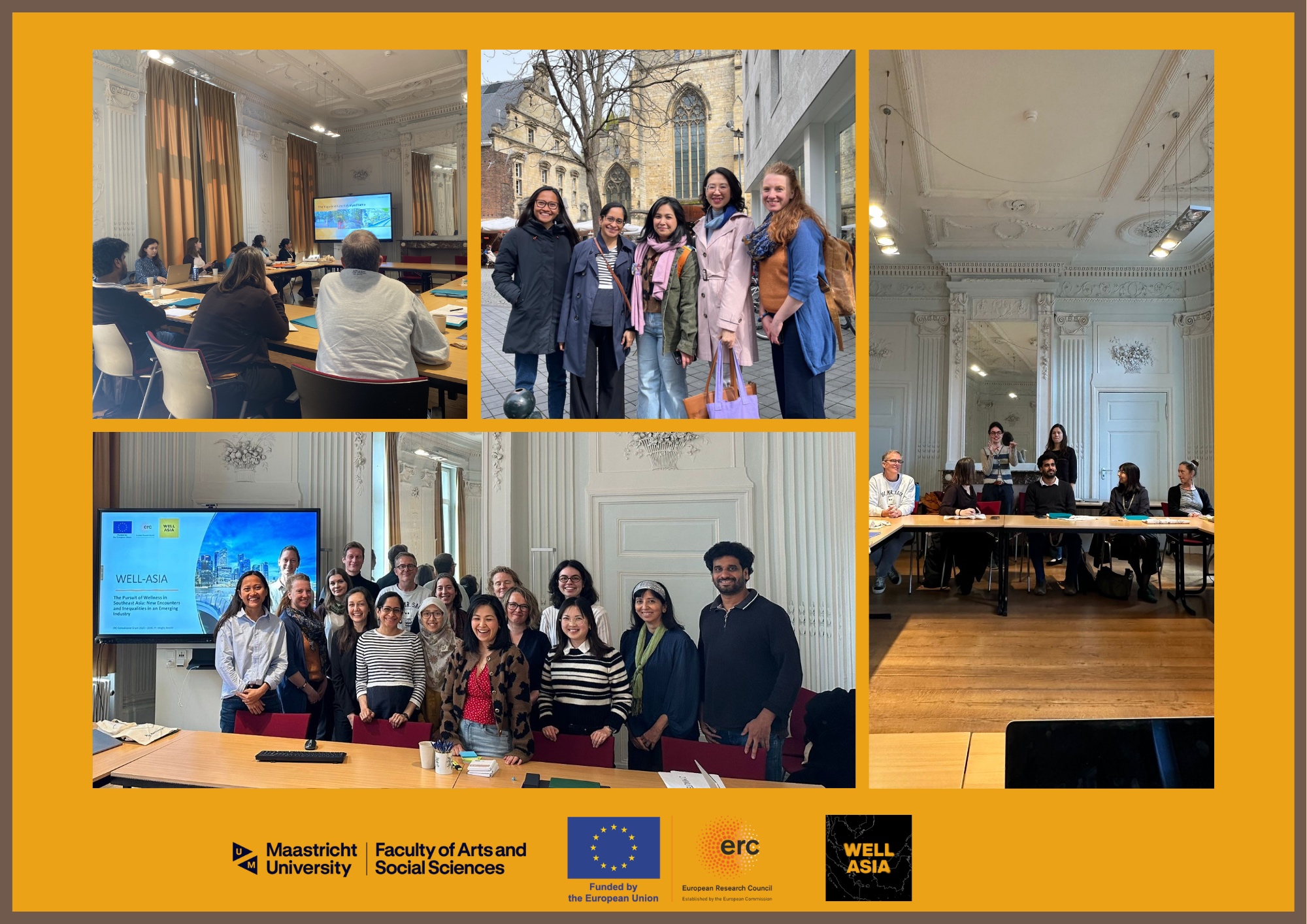
We are happy to share that the WELL-ASIA Kickoff Workshop was a great success!
About the Event
This two-day event brought together inspiring scholars broadly working on themes relating to wellness within Asia and in other regional contexts. The topics that were covered spanned from medical anthropology and the commodification of health, to embodied practices and the labour of wellness and hospitality workers, tourist and lifestyle mobilities, and wider questions relating to spiritual and planetary wellbeing. Over the two days, we had five panel sessions on these topics where the participants presented their work, expertise, and findings from recent studies as well as breakout sessions where we discussed methods, ethics, and collaborations.
Ultimately, what we aimed to understand is what it means to live well in today’s mobile and capitalist world; reflect on what is distinctive about the expansion of a wellness industry and its practices in this moment in time, and how it relates to historically-rooted healing practices and mobilities across borders; and aspirations and experiences that are not reduced to market logic.
Key Takeaways
We discussed the political and economic entanglements in the commodification of wellness practices and concluded that the nation/state cannot be removed from this discussion, with many wellness practices linked to nationalist projects and state interests. We also need to think about ‘the political’ beyond formal politics in ways that include the politics of wellness, of the body, and of spirituality.
Another theme that came up relates to the body and how it is a central actor when it comes to carrying and enacting dreams, aspirations, and transformational practices. Particularly interesting for the WELL-ASIA project is that this not only happens among the people who seek out wellness or wellbeing but also the labour and workers involved in wellness themselves. Though much of the focus of wellness is on the individual body and narratives of self-care, it is critical to see the individual or the ‘self’ as embedded in communities, familial and relational networks. The discussion furthermore moved beyond wellness to wellbeing more broadly, which is bound up with ecological and ethical questions around healing (of the body, community, the land and environment).
A point that also came up is that a lot of wellness practices relate to boundary work: whether it is hardening or protecting boundaries, blurring them for strategic ends, or finding synergies or ways to blend wellness practices into institutional contexts.
Lastly, we discussed that it is important to consider the role of Asian consumers and practitioners as it is not just about ‘Western lifestyle’ migrants coming to Asia but that there are changing demographics and new processes of racialization in wellness within the region itself. With the WELL-ASIA project we aim for a more nuanced discussion that blurs the lines and goes beyond depicting the Global South as providing labour for ‘Northern’ consumers.
Overall, we had very fruitful discussions on diverse topics that gave us lots of insights to think about and take further when conducting fieldwork soon! We would like to thank all the scholars who joined us in Maastricht at the Maastricht University Faculty of Arts and Social Sciences!
We hope to keep in touch throughout the years and collaborate further 🙂!
Get a glimpse of the workshop through the photos above 📸
Photo credits: WELL-ASIA Team
Funded by the European Union. Views and opinions expressed are however those of the author(s) only and do not necessarily reflect those of the European Union or the European Research Council Executive Agency (ERCEA). Neither the European Union nor the granting authority can be held responsible for them.